Posts

Showing posts with the label salesforce 2024 release

Salesforce Custom Metadata Types Explained: Benefits, Setup, and Examples
Image
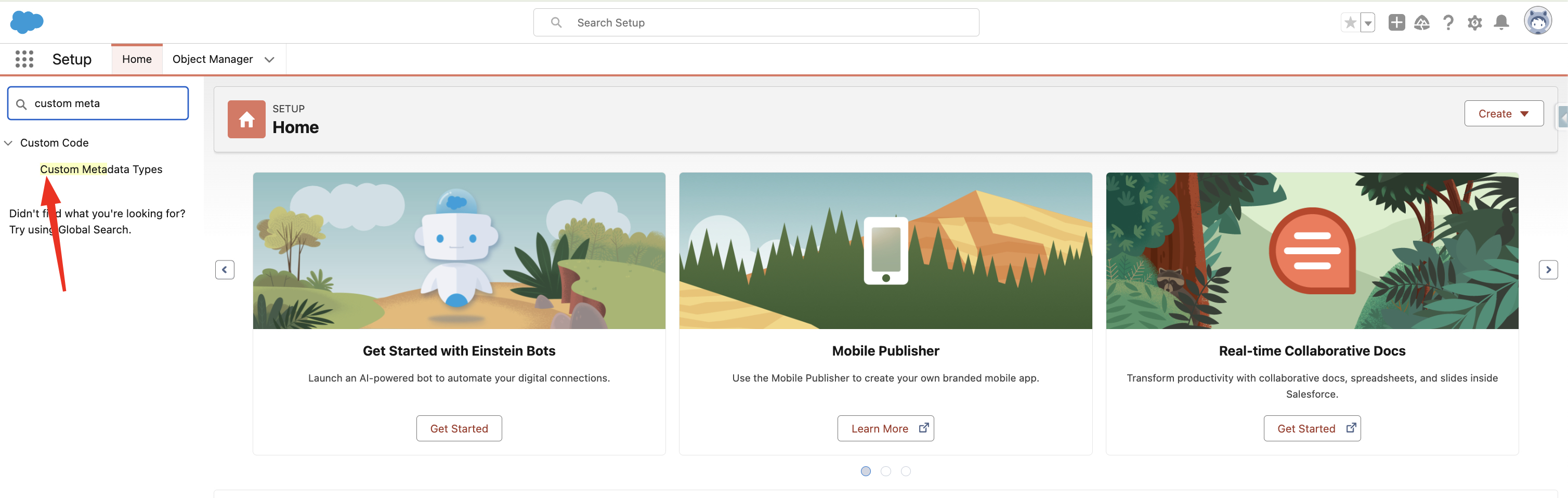
Salesforce's powerful Custom Metadata Types functionality lets developers and administrators make deployable, adjustable configurations and settings. The application cache contains all of the custom metadata, allowing access without requiring repeated database queries. How to create Custom Metadata Type 1. Search  Custom Metadata Type  in Setup Quick Find. 2. Click New Custom Metadata Type 3. Fill all required fields and click save Accessing Custom Metadata Type in Apex 1. Using getAll() - returns map of developer name to metadata type record list.   Datatype returned by the method - Map<String, Games__mdt> List<Games__mdt> mcs = Games__mdt.getAll().values(); boolean textField = null; if (mcs[0].GameType__c == 'PC') { textField = true; } system.assertEquals(textField, true); 2. Using getInstance(recordId) Returns a single custom metadata type record sObject for a specified record ID. Games__mdt mc = Games__mdt.getInstance('m00000000000001'); Using g...

Salesforce Custom Settings: Optimizing Your CRM for Maximum Efficiency

Image
What is Custom settings Salesforce Custom Settings is similar to custom objects, that allow you to create custom data sets and associate them with your Salesforce organisation. It store data in the application cache, enabling efficient access for various Salesforce functionalities like formula fields, validation rules, Apex, and SOAP API. Why we use Custom settings It allow to store configuration data including default settings for org, application parameters, or any other custom data that can be used in apex or LWC.   Unlike custom objects, they can be accessed without needing to perform SOQL queries, making them faster and more efficient for accessing configuration data. Types of Custom Settings 1.  List Custom Settings It provides a reusable set of static data that can be accessed across your organization, It  doesn’t vary with profile or user.  Examples of list data include three-letter country code abbreviations. 2. Hierarchy Custom Settings It uses a built...

All About Permission Sets and Permission Set Group

Image
  What is Permission Sets? Permission set is a way to give a user access permission to various tools and functions, Salesforce recommends permission sets as a way to manage user permissions because they do not change access settings on profiles. What is Permission Sets Groups? Permission set groups are collections of individual permission sets. They are a convenient way to group or bundle related permission sets, making access management easier for users who have several tasks or jobs that require different permissions at the user level. User can have multiple Permission sets and permission set groups. Best Practice: When possible, assign users the Minimum Access (OWD, Profile level), and then use permission sets and permission set groups to grant users only the permissions that they require. Create a muting permission set to remove permissions from a permission set group while keeping the included permission sets intact. There is no need to build almost similar permission sets wit...

SOAP Integration in Salesforce

Image
If you don’t know the basics of SOAP fear not, because I've got you covered! Dive into the basics of SOAP with my latest blog, ' SOAP Explained: With JavaScript .’ Oh, you already know about SOAP and are here to learn how it works in Salesforce? You've come to the right spot! Let's get started. SOAP Integration in Salesforce SOAP is a protocol where client and server are tightly coupled meaning that minor changes on either side can potentially disrupt the connection.   To use SOAP API, your org must use Enterprise Edition, Performance Edition, Unlimited Edition, or Developer Edition. In all supported editions, a user must have the API Enabled permission turned on in the user profile they’re assigned.  In Salesforce, Apex SOAP web services(It is like a class) allow an external application to invoke Apex methods through SOAP Web services. The Web service that is available to you is defined in generated WSDL file. What is WSDL? Web Service Description Language is a file t...